
SublimotionProcess® for food, pharma and high-tech
SublimotionProcess® is a hygienic stainless steel surface treatment without acids. Dirt and biofilm adhere less easily to the treated stainless steel. That can save cleaning work and reduce the risk of contamination. You treat your parts yourself, in a Phibo installation.
Phibo will call you after your request. Prefer to call us yourself? +32 55 21 98 99
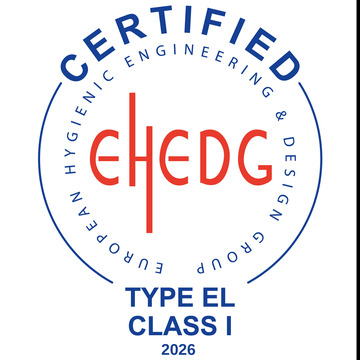
EHEDG certified Type EL Class I for welded stainless steel tube with this finish, cleanable without dismantling
The problem
Stainless steel is not hygienic by nature. After welding, grinding and bending, spots remain where product residues and micro-organisms take hold. That is where the risk of microbial contamination and corrosion starts. Common treatments only partly solve this: after chemical pickling, ACTALIA still found microbial residues, and after glass bead blasting, traces.
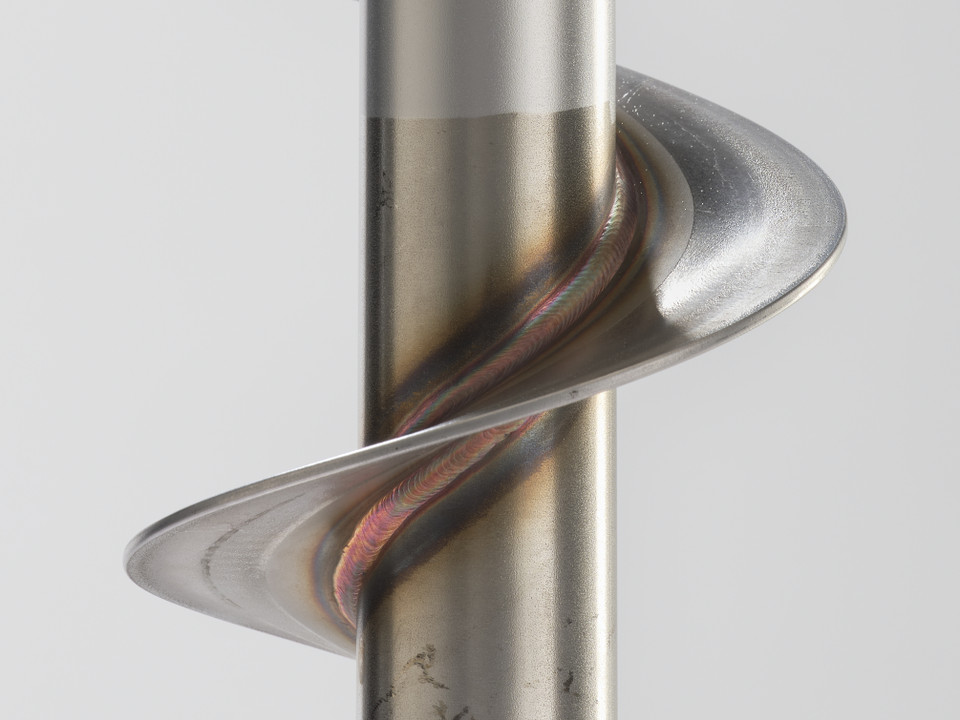
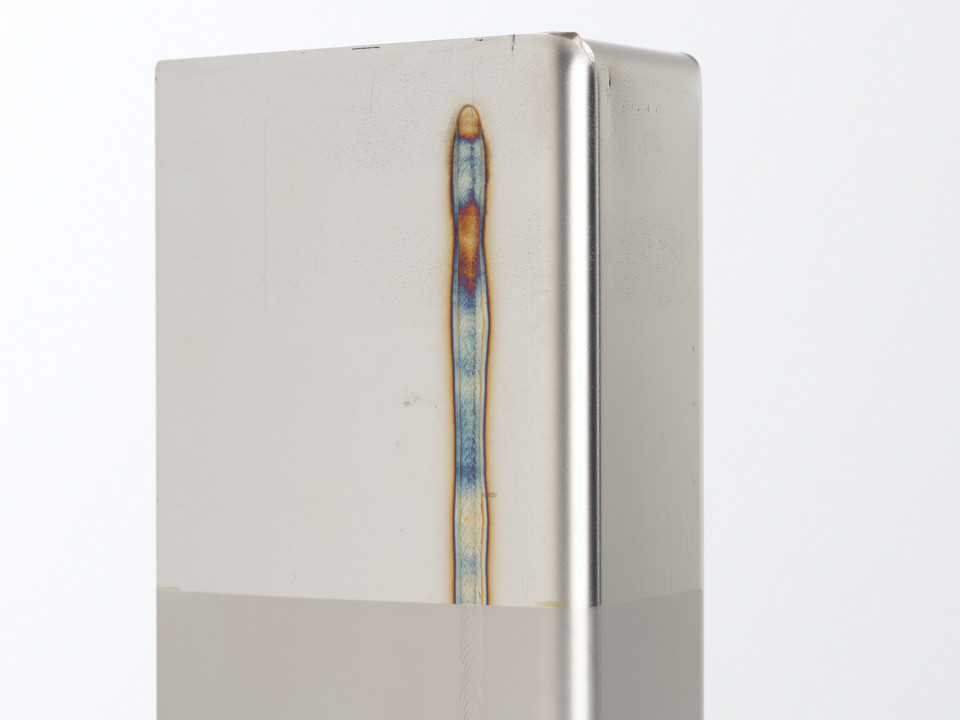
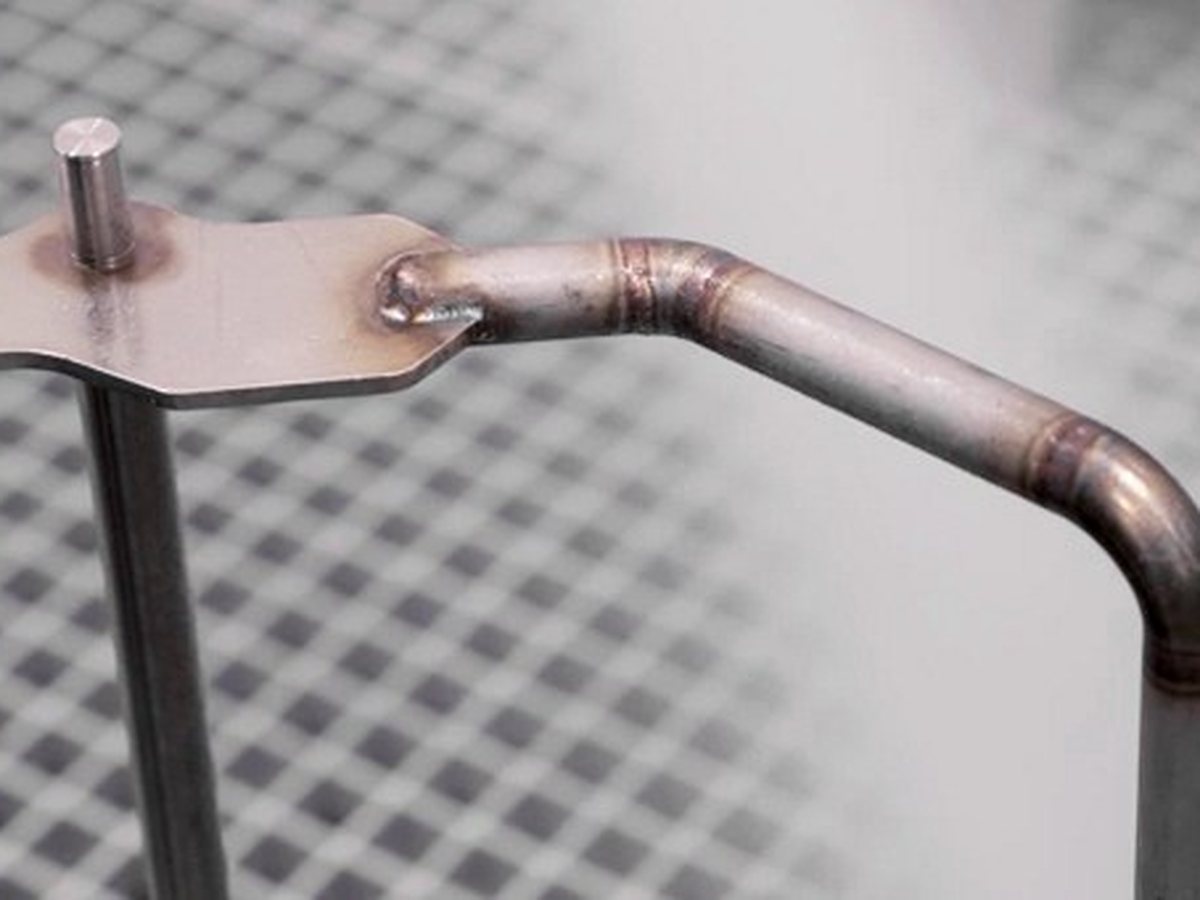
Discolouration and irregularities remain around a weld. How you treat that weld partly determines how much rust appears later on.
Micro-organisms attach to the surface and build a protective layer on it. Your daily cleaning does not always fully remove such a biofilm, and what remains can recontaminate the next production run.
Flour, starch, sugar and cocoa cling to hopper walls. The worse they slide, the steeper and taller the hopper has to be.
Grinding residue left on stainless steel is a source of rust. The stainless steel surface must be clean to form its protective oxide layer.
Pickling is done with acids, and the rules governing their use keep getting stricter. The chemical waste has to be disposed of separately, and that costs money.
The solution
The process cleans and conditions the stainless steel surface in a single step, with no acid bath or pickling paste on your shop floor. It is a full alternative to pickling and passivation, glass bead blasting and electropolishing. It is also a sustainable process: no chemical waste and a closed loop. Phibo backs this up in a BAT (best available technique) declaration.
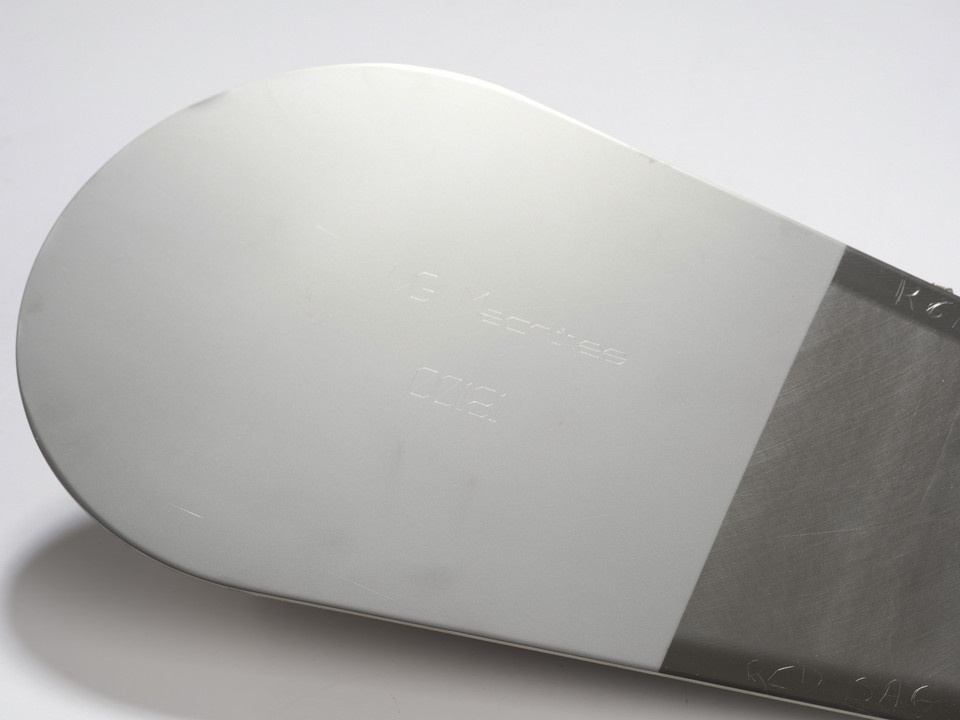
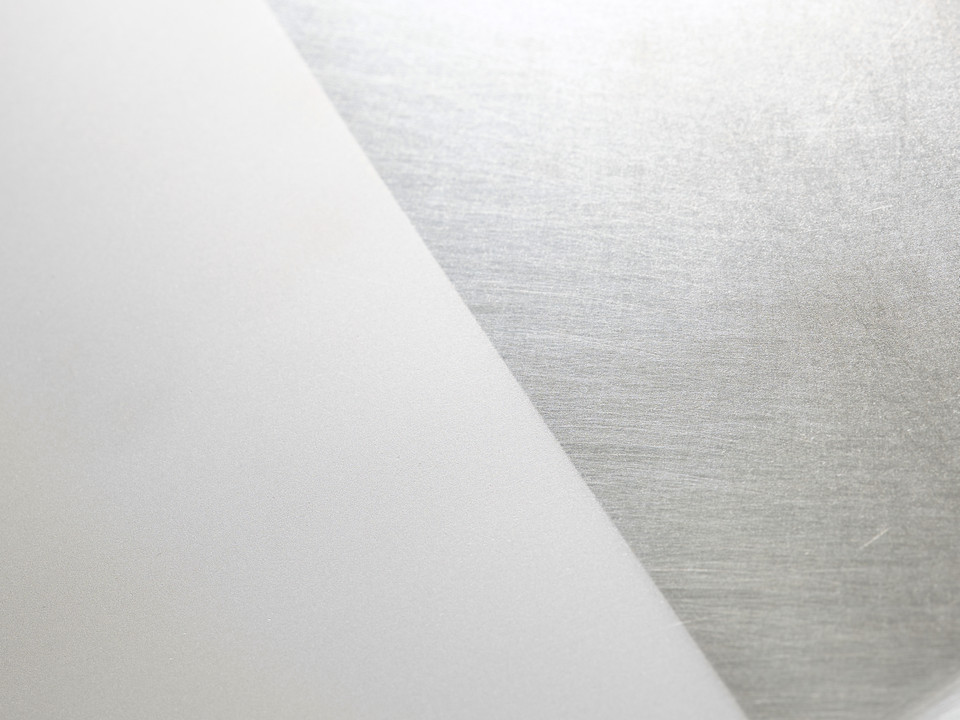
On stainless steel with a 2B finish, ASML confirmed a roughness Ra below 0.8 µm. The finish is uniform, across the weld too. Product residues have less to cling to.
The projection closes microcracks and pores, without distorting the part the way glass bead blasting does. Dirt and bacteria find fewer places to hide.
Protection comes from the stainless steel's own oxide layer. According to ArcelorMittal-OCAS, a thick, high-quality passive film forms after treatment. There is no coating that can wear off.
Prefer to call us first? +32 55 21 98 99
Comparison
To give stainless steel a hygienic finish, most companies today choose from these techniques.
At a glance
| SublimotionProcess® | Electropolishing | Pickling and passivation | Glass bead blasting | Coating | |
|---|---|---|---|---|---|
| Principle | Water, compressed air and an inert mineral suspension | Electrochemical, in a bath of concentrated acids | Acid bath, paste or spray, often followed by passivation | Dry blasting with glass beads | A layer on the stainless steel, e.g. fluoropolymer or ceramic |
| Free of chemicals | YesNo acids, a non-toxic suspension | NoSulphuric and phosphoric acid | NoPickling: hydrofluoric and nitric acid. Passivation: nitric or citric acid | YesNo acids, but a dry abrasive | Depends on the coating; fluoropolymers fall under the European PFAS proposal |
| Effect on the stainless steel surface | Cleans and conditions, without a layer | Dissolves a thin layer of metal, typically a few to a few tens of µm | Pickling dissolves heat tint and a thin layer of metal; passivation removes free iron | Gives the surface a matt finish | Adds a layer that can wear or come loose |
| Free of microbial residues after CIP cleaning | YesACTALIA, EHEDG method | YesACTALIA, EHEDG method | NoResidues after chemical pickling | Traces after glass bead blasting | |
| Corrosion resistance (OCAS) | YesAt least equal to electropolishing, 3 years outdoors | YesComparable to SublimotionProcess®, 3 years outdoors | Lower than SublimotionProcess® | Lower than SublimotionProcess® | |
| Powders slide off | YesBest overall result across the powders | NoVery unfavourable due to sticking |
Prefer to call us first? +32 55 21 98 99
Operating cost
Beyond the purchase, what an installation costs every day matters too. SublimotionProcess® uses no acids and no single-use materials.
No acids are used, so there is no chemical waste to dispose of separately.
Water and suspension are filtered and reused. Up to 85 percent fewer raw materials and less waste than glass bead blasting.
Up to 50 percent less energy than conventional glass bead blasting. A standard installation needs less than 15 kW.
Your operators only wear a basic PPE set for wet conditions. No specific permit or protection against harmful substances is needed, and no additional medical examinations.
External evidence
Research institutes and industrial partners compared SublimotionProcess® with common techniques. These are their results.
The EHEDG laboratory ACTALIA cleaned stainless steel plates using a CIP protocol. Only the plates treated with SublimotionProcess® and with electropolishing remained free of microbial residues.
Flanders' Food, KU Leuven, Ghent University and ILVO tested this in the Kill Film project. For three of the four micro-organisms, including E. coli, biofilm adhesion dropped by 99 percent (2 log) compared with standard stainless steel with a 2B finish. For the fourth, it stayed the same.
ArcelorMittal-OCAS placed treated plates outdoors for three years, next to a steel plant and just above seawater. SublimotionProcess® held up at least as well as electropolishing, and better than the other techniques.
In the CORONA project, the Belgian Welding Institute compared eight post-weld treatments alongside an uncleaned weld. SublimotionProcess® always ranked among the three with the least corrosion, together with chemical pickling paste and electrochemical cleaning with phosphoric acid.
An industrial partner measured the angle at which flour, starch, milk powder, sugar and cocoa slide off stainless steel. SublimotionProcess® gave the best overall result. On electropolished stainless steel, starch and cocoa in particular stuck.
In 2016 and 2021, welded stainless steel tube with this finish obtained the EHEDG Type EL Class I certificate, cleanable without dismantling. Migration test under EU Regulation 1935/2004 passed for contact with all foods. Process parameters approved by ASML in January 2025.
Quality label
The test results apply to a process within Phibo's parameters. ASML requires its suppliers to follow those parameters. The label and the audits show that your installation does. You can present that evidence to your own customers as well.
Anyone applying SublimotionProcess® does so with an accreditation from Phibo. At every audit, this shows that you follow the process as it was tested.
Phibo tests your installation first at the factory and then at your site. This proves that your installation runs the process within the parameters.
At the annual inspection, Phibo checks your installation again and confirms the certification. You agree the scope with us.
References
A selection of Phibo customers across all its surface technologies, by industry.
 Beverages
 Pharma packaging
 Pharma
 Chemicals
 Nuclear
 Steel
SteelHow it works
The operator needs no complicated settings.
The part goes into the cabinet or onto the platform, on a work grid or a turntable.
Water and compressed air project the suspension onto the surface. You set the process pressure between 0 and 7 bar.
The operator rinses the part with filtered water and blows it dry with a blow gun.
The suspension is filtered and reused. A sensor measures air consumption during every treatment.


Prefer to call us first? +32 55 21 98 99
Applications
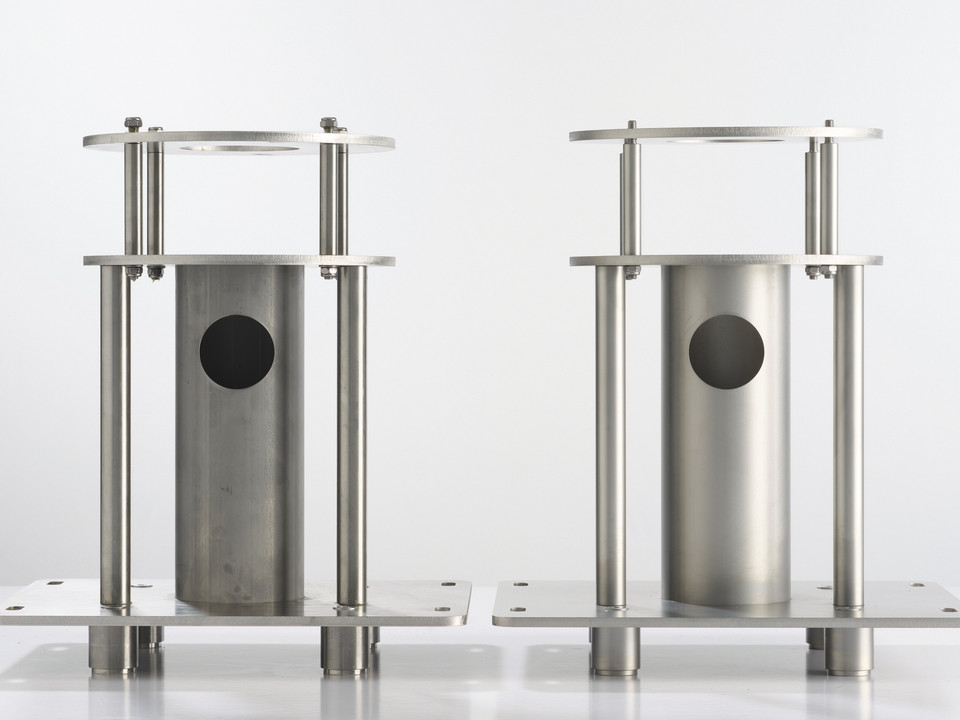
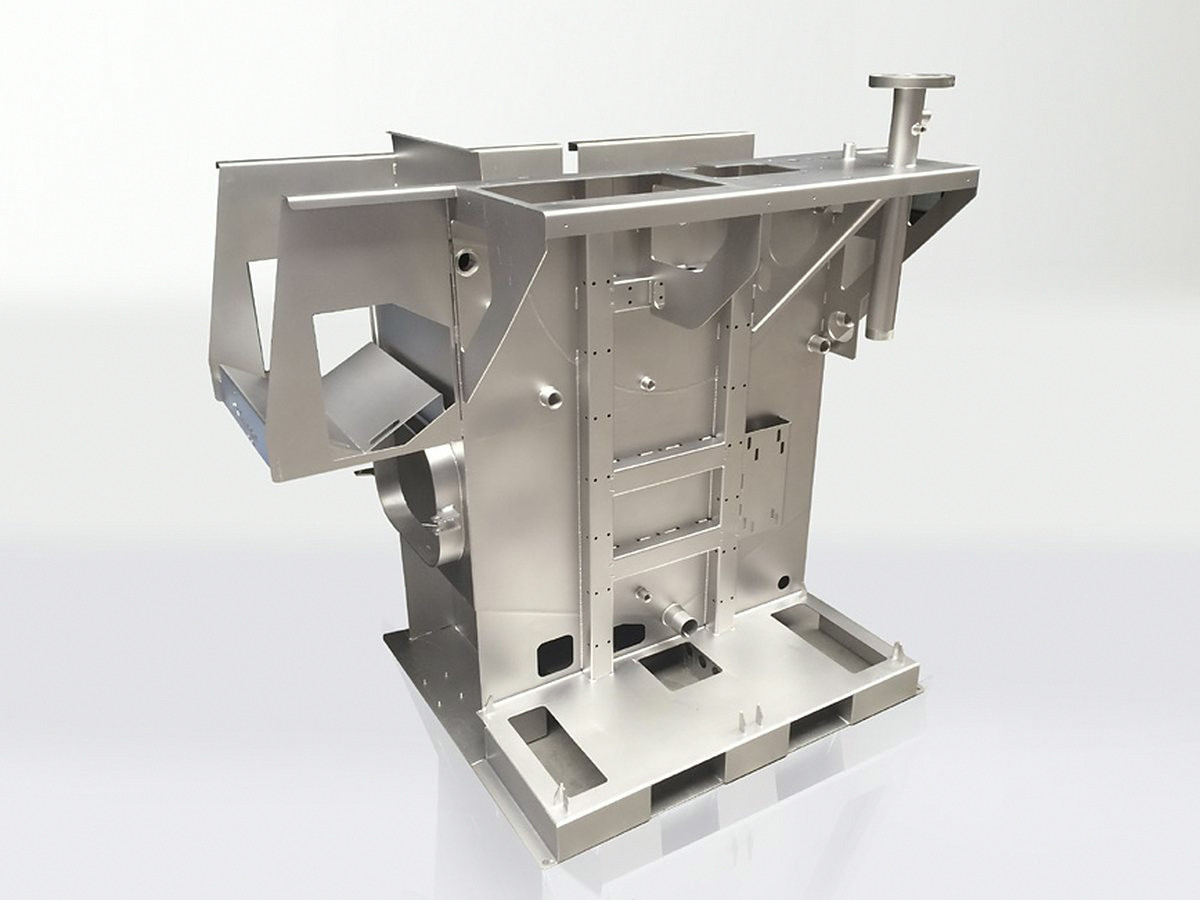
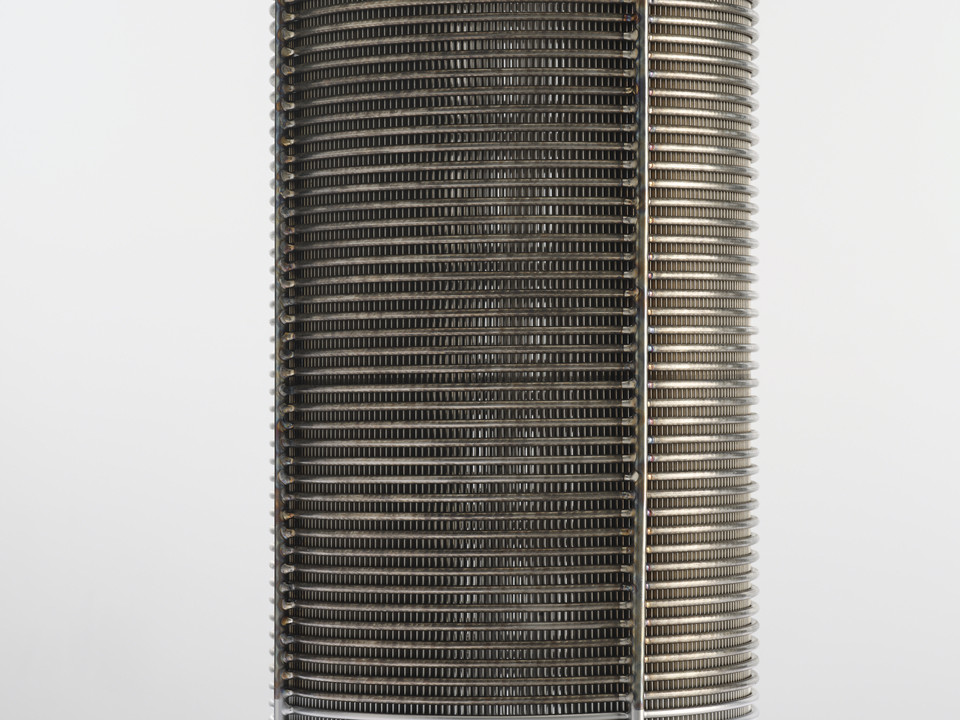
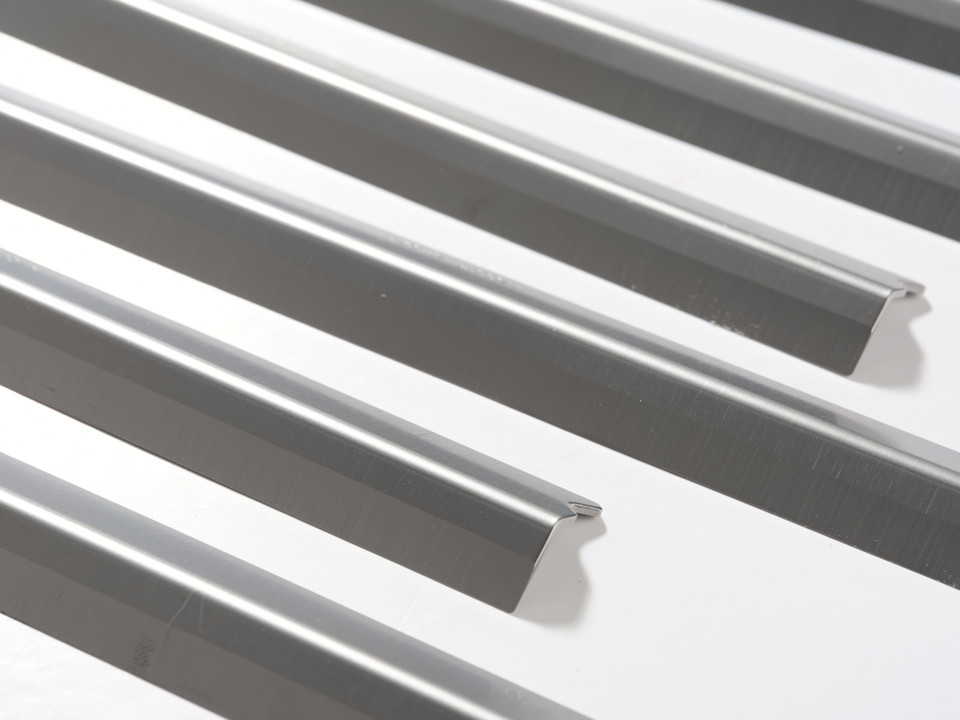
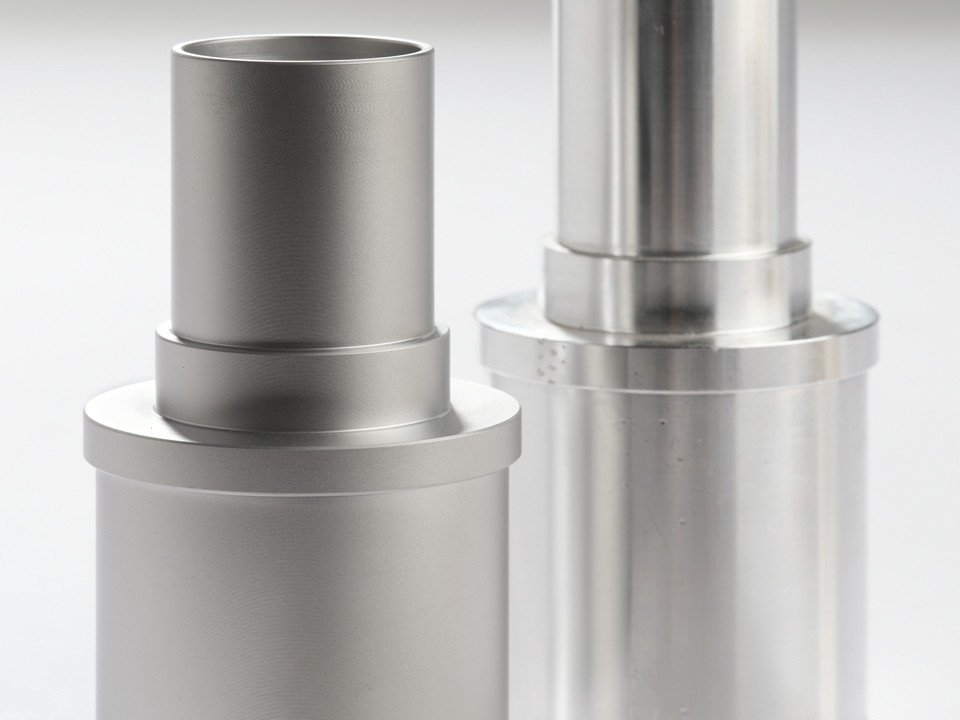
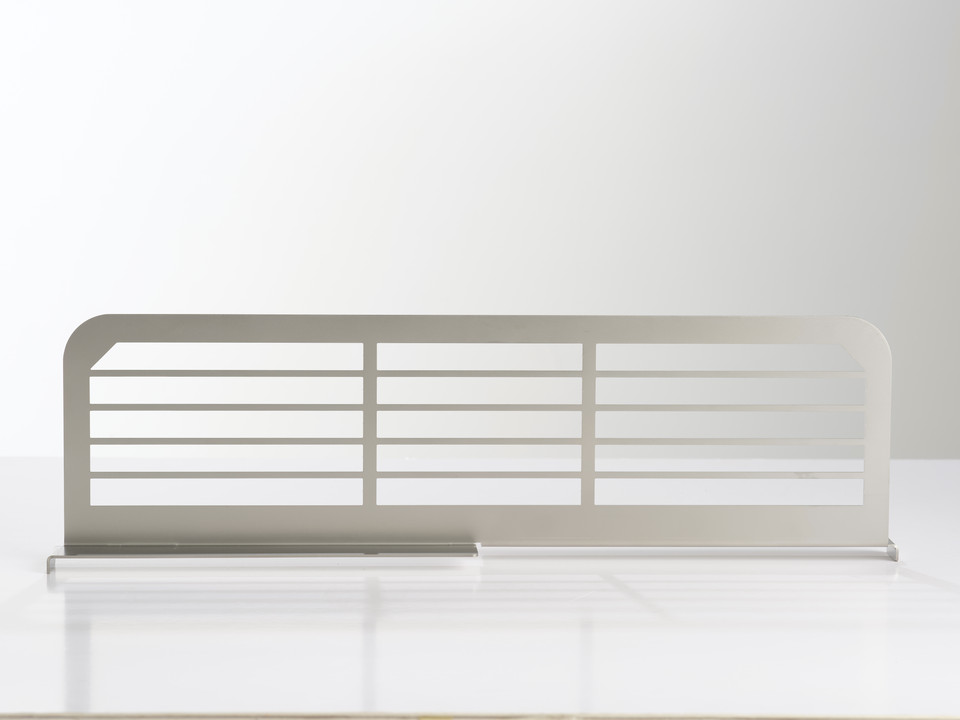
The process treats stainless steel, as well as aluminium, titanium and brass. From small turned parts to large welded structures, wherever a surface has to be hygienic and corrosion resistant.
Prefer to call us first? +32 55 21 98 99
Installations
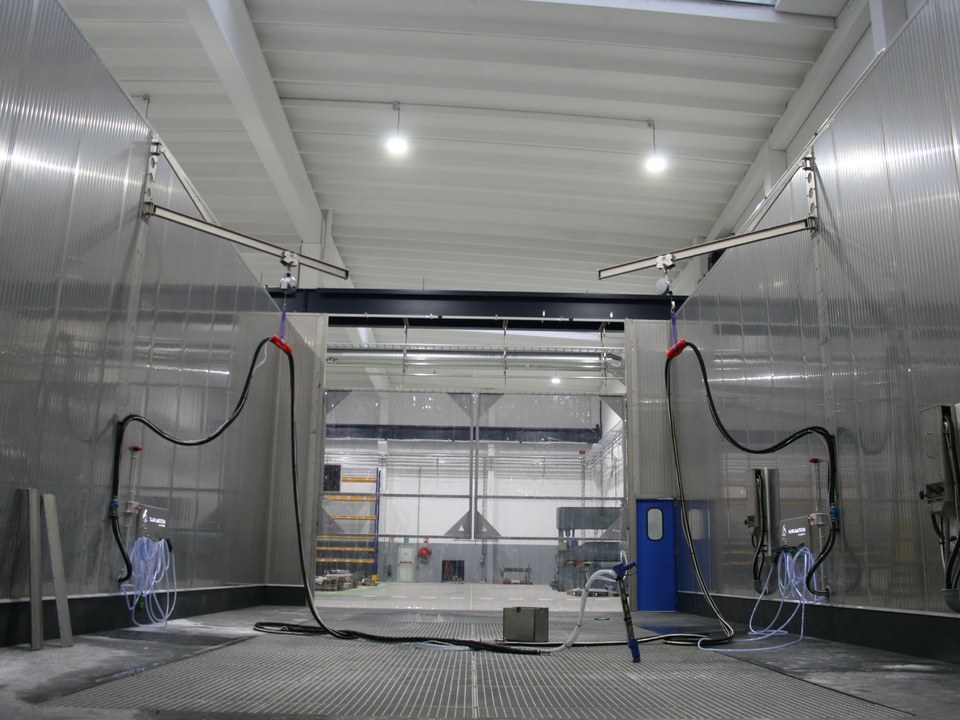
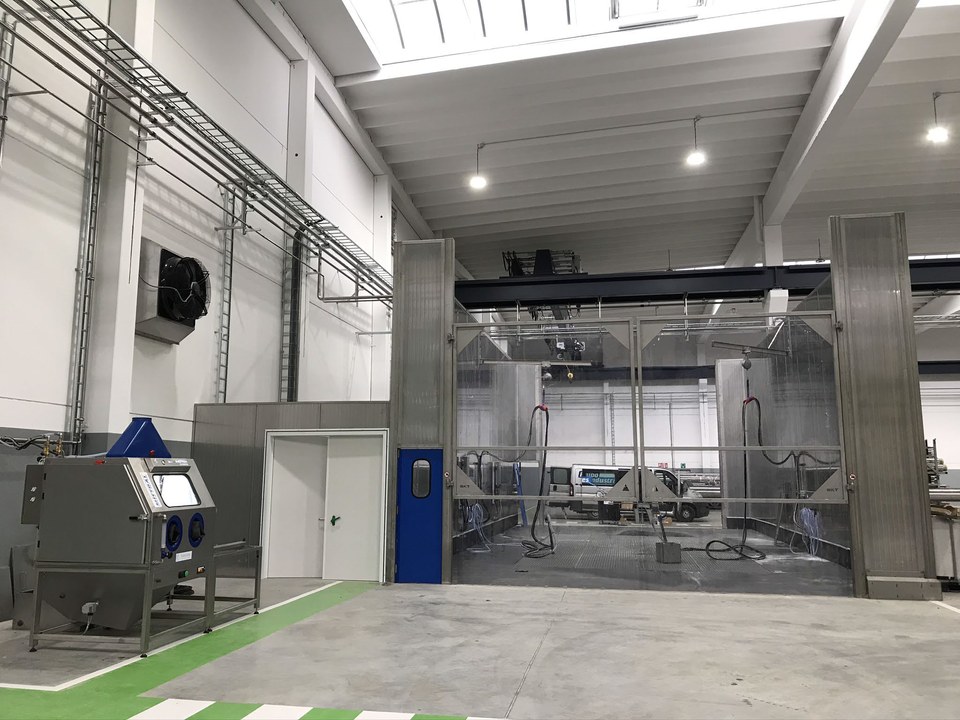
Phibo works with two standard installations: a cabinet for smaller parts and a platform for large ones.
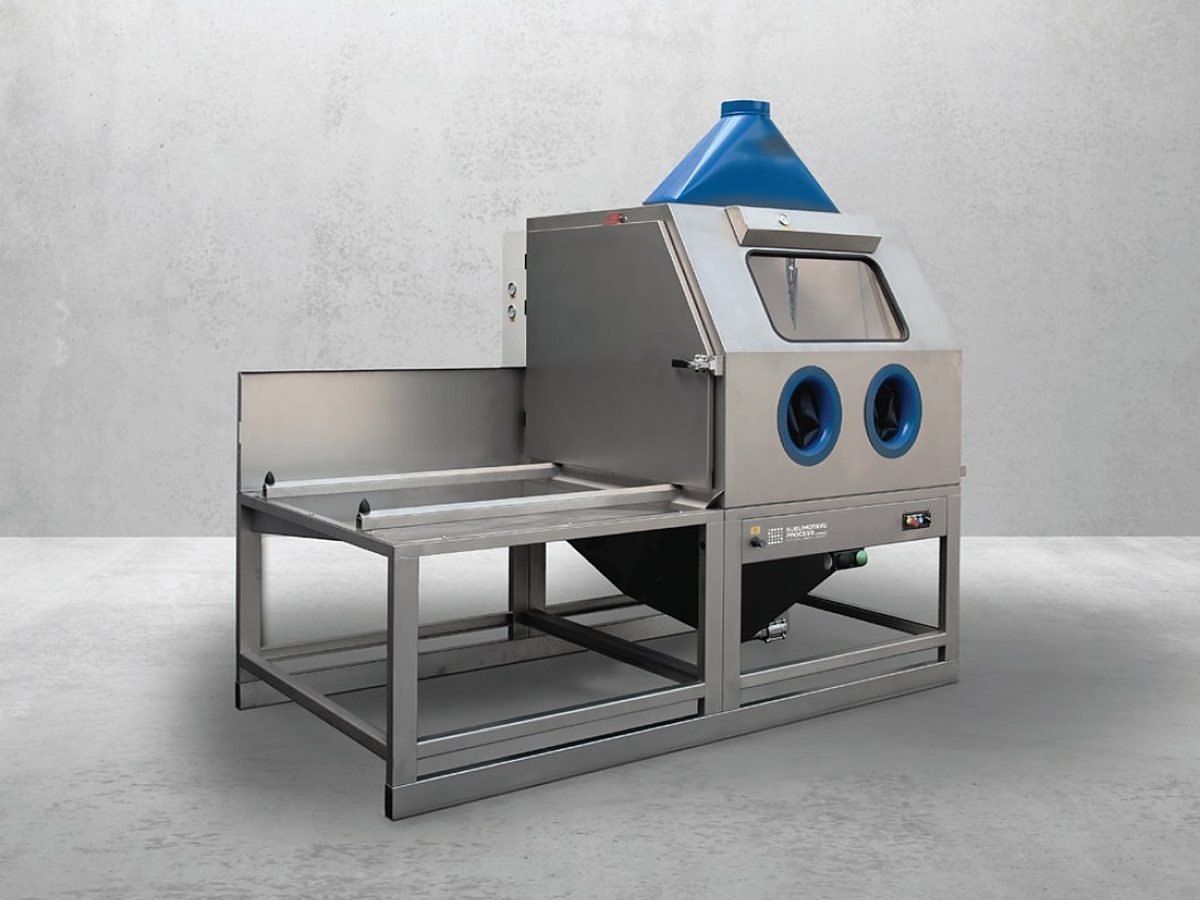
For smaller and lighter parts. The operator stands outside the cabinet and works through the gloves in the front wall.

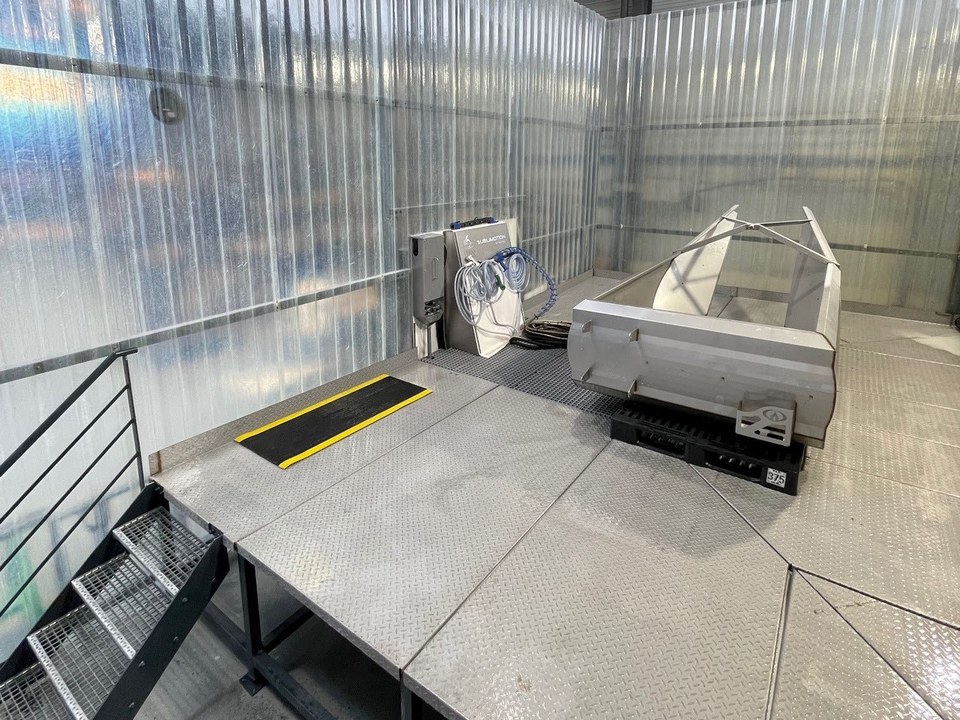
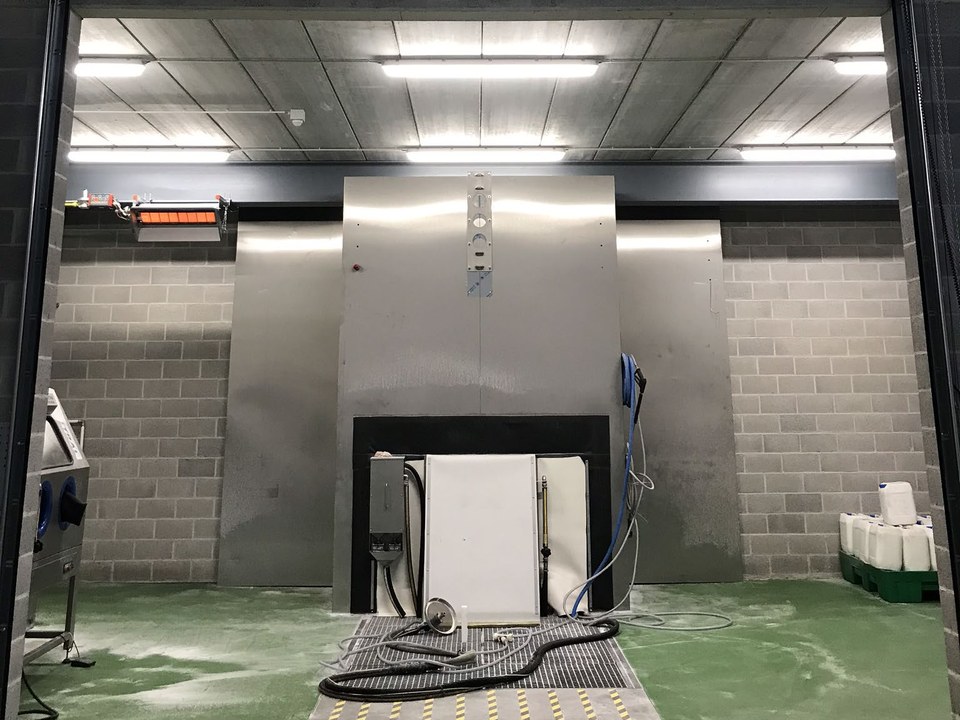
For small to bulky parts. The operator stands on the platform and moves around the part. You can build the platform into the floor, or install it on your existing floor to get started sooner.
| Dimensions and operation | |
|---|---|
| Internal dimensions | ± 1230 x 1230 x 1050 mm, above the work surface |
| Access | Two side doors, each with a safety switch |
| Work surface | Composite grid over the full surface |
| Loading table | Tilting turntable on trolley and rails, Ø 800 mm, max. 250 kg in horizontal position; loading by overhead crane possible |
| Option | Internal turntable Ø 1000 mm, 250 kg, instead of the loading table |
| Operation | On and off by knee switch; gloves in the front wall |
| Process pressure | Adjustable from 0 to 7 bar |
| Heating | Recommended process temperature 30 to 40 °C for greasy or oily contamination |
| Required connections | |
| Compressed air | Supply line 5/4", minimum 3/4", 1,150 l/min at 7 bar |
| Water | Minimum 1/2" BSP, 2 to 6 bar |
| Electricity | 3 x 400 V + N + earth, 50 Hz, 14 kW |
| Drain | At the level of the installation floor |
| Dimensions and operation | |
|---|---|
| External dimensions | ± 3150 x 2000 mm (Tornado T3020) |
| Work surface | Composite grid, load capacity 500 kg/m² |
| Operation | On/off button on the process gun |
| Operators | One or two at a time |
| Process pressure | Adjustable from 0 to 7 bar |
| Required connections | |
| Compressed air | Supply line 5/4"; 2,600 l/min at 7 bar for one operator, 5,200 l/min for two |
| Water | Minimum 3/4" BSP, 2 to 6 bar |
| Electricity | 3 x 400 V + N + earth, 50 Hz, 14 kW |
| Drain | Drain or sump with submersible pump, at installation floor level or lower |
Indicative data. The final values for your installation are stated in the quotation.
At customer sites
Phibo has installed SublimotionProcess® equipment in Belgium, the Netherlands, France, Slovenia, Romania, Poland and Spain, coordinated from Belgium.
Prefer to call us first? +32 55 21 98 99
Purchase
Over the full term, leasing costs more than buying. After a number of years, the purchase has paid for itself.
You receive the installation ready for use. In many cases the investment qualifies for European, national or regional subsidies.
Consumables
The suspension consists of inert mineral particles of natural origin, mixed with water. Inert means they do not react with any substance. They are natural minerals, harmless to your operators. The whole process thus stays free of chemicals, the big difference from chemical pickling. Do not add anything to it: with other substances in the suspension, Phibo cannot guarantee the result.
You order the suspension, spare parts and protective equipment from the same partner as the installation.
Service and maintenance
You arrange maintenance, repairs and spare parts directly with Phibo. Our own technicians do the work.
We schedule the inspections of your installation and follow them up. You agree the scope of the contract with us.
Spare parts come from our own warehouse. Our technicians carry out the repair.
During commissioning, your operators learn to run and set up the installation.
Frequently asked questions
The questions buyers ask most about the process, certification and purchase.
SublimotionProcess® is a hygienic stainless steel surface treatment: a mechanical process without chemicals. Water and compressed air project an inert mineral suspension onto the surface. As a result, dirt and biofilm adhere less easily to the stainless steel surface.
Electropolishing dissolves a thin layer of metal in a bath of concentrated acids. SublimotionProcess® works without chemicals, using water, compressed air and an inert suspension. In the ACTALIA cleanability test, both remained free of microbial residues. At ArcelorMittal-OCAS, SublimotionProcess® resisted corrosion at least as well, and in a sliding angle test powders slid off it more easily overall.
Pickling and passivation use acids, such as hydrofluoric, nitric or citric acid. SublimotionProcess® works without chemicals. In the ACTALIA cleanability test, microbial residues remained after chemical pickling. After SublimotionProcess®, none did.
Stainless steel, as well as non-ferrous metals such as aluminium, titanium and brass. From small turned parts to large welded structures.
In 2016 and 2021, SublimotionProcess® obtained the EHEDG Type EL Class I certificate for welded stainless steel tube with this finish: cleanable in place, without dismantling. A migration test under EU Regulation 1935/2004 confirmed that the tested samples of treated stainless steel are suitable for contact with all types of food.
You buy it. Over the full term this costs less than leasing, and the purchase pays for itself after a number of years. The price includes on-site installation, commissioning, the training of your operators and the full documentation, among other things.
That depends on the size of your parts, the number per day and the choice between cabinet and platform. Phibo first calls you to go through your application, then you receive a quote for your application. In many cases the investment qualifies for European, national or regional subsidies.
Your quote
Tell us which parts you want to finish hygienically, what material they are made of and how large the largest one is. Also tell us how many parts you treat per day. You will then receive a proposal with the installation that fits. One partner, from the first conversation to the last spare part.
Learn more
The SublimotionProcess® website covers the technical background, the cabinets and platforms, the industries and the certification.
Also from Phibo
See the other installations from Phibo, or read more about hygiene in the food chain.